
Lo's Pharmacy talk to us about Hub & Spoke
Q&A with William Kong, Commercial Manager Lo's Pharmacy
Automation in pharmacy is not new. Back in the late 1960s, John and Frank Kirby from Manchester developed the first portable digital pill counter. It was a practical solution to a real operational problem: counting accurately, reducing human error, and saving time.
By the 1990s, dispensing robots began appearing in pharmacies. At the turn of the millennium, fully integrated automation systems connected to pharmacy management software became the next step forward.
Each innovation reflected the same underlying reality: dispensing is labour-intensive, and pharmacy teams need support to work efficiently and safely.
What has changed today is not the principle; it’s the scale, the integration, and the regulatory environment that now allows automation to operate more effectively across organisations.
At EMT Healthcare, we’ve seen growing interest in automation across the sector, particularly as pharmacies face increasing workload pressures, tighter margins and expanded clinical responsibilities.
Why does automation matter more now?
Dispensing volumes remain high. Margins are tighter. Workforce pressures are ongoing. At the same time, community pharmacy is being asked to deliver more clinical services, consultations, and prescribing support.
From a pharmacy floor perspective, something has to give. The answer cannot be simply asking teams to work harder.
Automation provides breathing space. It allows repetitive, process-driven tasks to be managed more consistently, so pharmacists and teams can focus on patient-facing care.
What is Hub & Spoke Dispensing?
Hub and spoke is a dispensing model where one pharmacy, the hub, undertakes elements of the dispensing process on behalf of another pharmacy, the spoke.
In practice, this usually means the hub assembles and labels prescriptions, while the spoke pharmacy supplies the medicine to the patient and remains responsible for patient interaction and clinical oversight.
The model is designed to centralise the more process-driven aspects of dispensing, allowing spoke pharmacies to focus more time on patient-facing services.
Lo’s Pharmacy was an early adopter of automation within its dispensing operations. We caught up with William Kong, Commercial Manager at Lo’s Pharmacy, to understand how hub and spoke and automation are working in a real pharmacy environment.
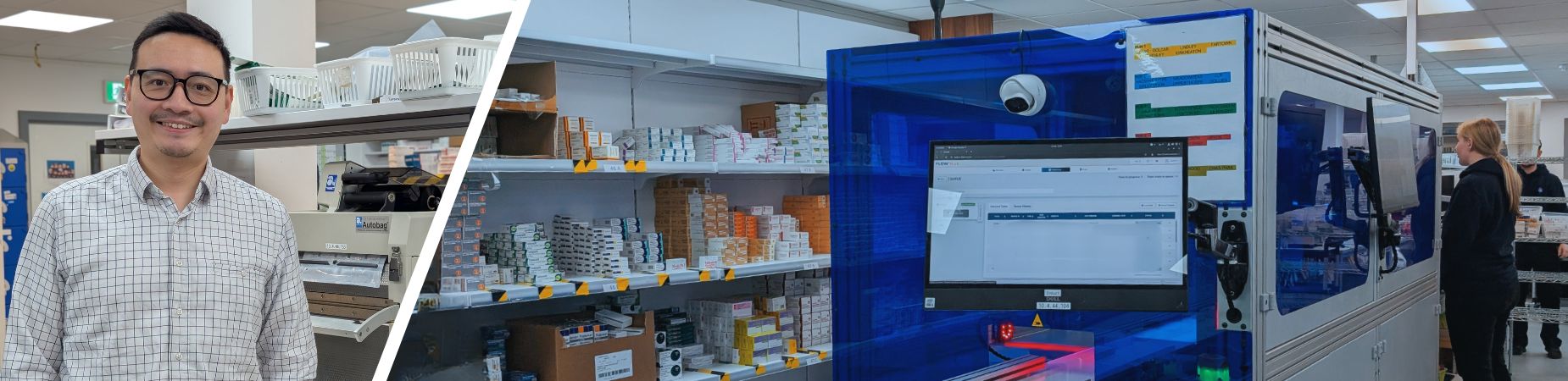
Lo’s Pharmacies move to automation
Lo’s Pharmacy is a second-generation, family-run group established in 1992, now operating 38 pharmacies across the UK. Like many growing pharmacy groups, Lo’s has had to balance scale with maintaining the personal service that defines community pharmacy.
EMT Healthcare has worked alongside Lo’s for many years, supporting their dispensing operations with essential consumables. That relationship has evolved as the group has invested in automation, including the introduction of an Autobag system, with EMT now supplying the specialist bags that support this workflow.
Automation at this scale is not a small decision. It represents a strategic commitment to modernising dispensing operations while continuing to protect patient-facing care.
We visited Lo’s to see the system in action, understand how automation has been embedded into day-to-day pharmacy practice, and explore what this investment means in the context of the recent hub and spoke regulatory changes.
EMT: Thanks for taking the time to catch up with us! We understand you are one of the early adopters of the Centred Solutions System, can you tell us more about why you decided to take the leap into automation?
William: We have a five-year plan to create more services to benefit the local community, the plan to invest in automation was to future-proof the pharmacy and to create the capacity for offering services.
EMT: Is there a fast return on your investment? What benefits are easily identified now?
William: It is a big capital investment for the company and a cost centre that will take time. Centralising the dispensing operation has had immediate benefits, staff in the pharmacies have more time to focus on services and not spending hours on managing stock. Pharmacists and their teams are busy taking calls, seeing customers, all the usual day to day tasks that have to be done, this has helped create more time for them.
It does all take time, there is a lot of training that has to take place as the dispensing flow changes, but we believe in the long-term vision.
EMT: How does the quantity of dispensing vary now with automation to without?
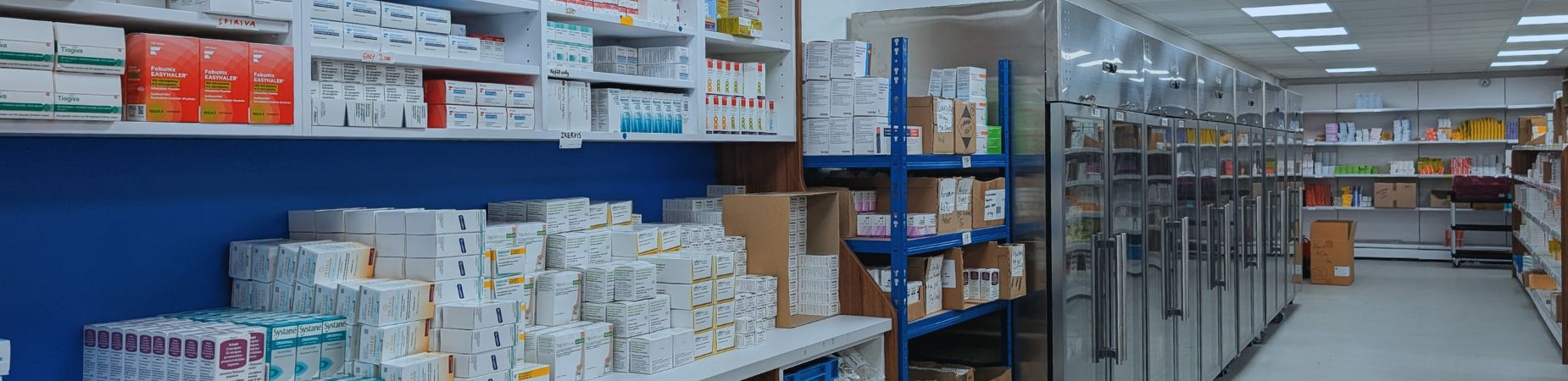
William: To give you an idea of the volume, we processed 230,000 packs between December and January with 10 members of staff. To put into context a pharmacy with 5 staff could usually process around 10,000 packs, it makes a difference!
It is a big investment though and you need the space as well as the capital to invest in it. Smaller pharmacies may not be able to make the most of it, unless there is better investment in services for pharmacies.
EMT: Will you continue down the automation route?
William: It is difficult to say as we still are waiting for the contract and what that will look like. We are hoping to see more from Pharmacy First and more GP referrals, we do have some areas where we see success with GP referrals, but it’s not consistent.
“I see the future of a service-driven pharmacy and automation does go a long way to help with that.”
Automation for all: Hub and spoke changes in 2025
As regulation has changed and automation in pharmacy continues to scale, what was once seen as a bold idea only avaialble for the larger pharmacy groups, has now become a more accessible proposition for pharmacies of all sizes.
Before 2025, hub and spoke dispensing in England was only permitted between pharmacies that were part of the same legal entity, in other words, owned by the same company. This meant large pharmacy chains could operate centralised dispensing hubs, but independent pharmacies and smaller groups were effectively excluded from using the model at scale.
The 2025 regulatory update changed that.
Pharmacies that are not under common ownership can now legally enter into hub and spoke arrangements, provided they meet defined conditions around governance, record keeping, labelling, and patient communication.
In practical terms, this means:
- An independent pharmacy can use a separately owned hub to assemble prescriptions.
- The spoke pharmacy remains responsible for supplying the medicine to the patient.
- Both parties must have clear written agreements setting out responsibilities and accountability.
The change does not remove professional responsibility from the supplying pharmacy, but it does remove the ownership barrier that previously restricted collaboration.
For the first time, hub and spoke becomes a realistic option for a much wider section of community pharmacy.
Would you like to know more about automation and how it can work for you?
Get in touch today!

Ready for Automation?
Contact us to learn more about the options we have, from autobags to automated prescriptions retailing we can help.